Why This Adorable Font Is a Designer’s Secret Weapon
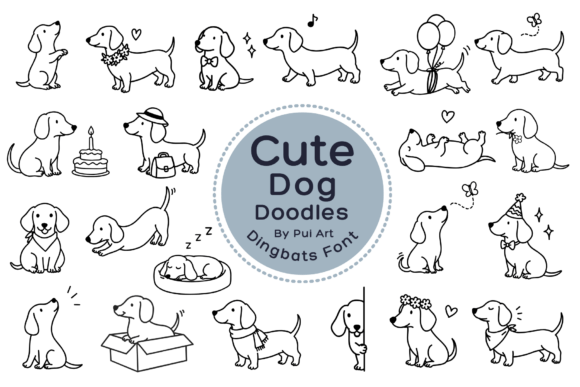
There is an immediate, visceral reaction to a design that feels handmade and joyful. In a landscape dominated by sleek, sterile sans-serifs and rigid grids, a touch of whimsy can stop a viewer in their tracks. Enter the world of hand-drawn dingbat fonts, specifically the delightful Cute Dog Doodle. This isn't just a collection of clip art; it is a carefully curated set of illustrations rendered as a typeface. Imagine a row of playful puppies, wagging tails, oversized bones, cozy dog houses, and intricate paw prints—all accessible directly from your keyboard. For designers, crafters, and small business owners, this asset bridges the gap between professional digital design and the warmth of a hand-sketched illustration. It transforms standard text-based layouts into engaging visual stories, offering a solution for anyone trying to convey friendliness, playfulness, or a love for pets.
Visual Appeal and Versatility in Modern Design
The charm of a premium font like this lies in its versatility across different media. Visually, the illustrations strike a balance between detail and simplicity. They are complex enough to be recognizable standalone icons—perfect for a logo or a sticker—but simple enough that they don't lose clarity when scaled down for embroidery or print on fabric. The "hand-drawn" aesthetic is currently trending heavily in modern typography because it injects humanity into digital spaces. When a user visits a website or picks up a product featuring these doodles, the message is instantly understood: this brand is approachable, fun, and detail-oriented.
From a brand identity perspective, using a creative font like this allows for rapid visual storytelling. You don't need to hire an illustrator for every small icon; the font acts as a library of design assets. Consider a pet groomer’s menu or a dog walking app’s interface. Instead of generic bullet points, using a small paw print or a dog bone adds a layer of thematic consistency that elevates the user experience. It works beautifully as a contrast element against clean sans serif fonts or even traditional serif fonts, creating a dynamic hierarchy that guides the eye.
Practical Applications for Entrepreneurs and Crafters
For the small business owner or the creative hobbyist, the utility of this typeface extends far beyond simple decoration. It is a workhorse for packaging design and merchandise. If you are selling homemade dog treats, the "Cute Dog Doodle" illustrations can be used to create custom patterned wrapping paper, seal stickers for bags, or the front-facing logo for your brand. Because it is a vector-based font, the graphics remain crisp whether you are printing them on a business card or blowing them up for a poster at a local adoption event.
The crafting community, particularly those utilizing cutting machines like Cricut or Silhouette, will find immense value here. The distinct shapes of the doodles make them ideal for vinyl decals, heat transfers for t-shirts, and intricate paper cutting projects for scrapbooking. Because the elements are contained within a font file, they are incredibly lightweight and easy to manage compared to individual image files. You can type out a phrase like "I Love My Dog" and intersperse the letters with doodles, or use the illustrations entirely on their own to create a nursery wall mural. The application for sublimation is also significant; the crisp lines transfer beautifully onto mugs, coasters, and tote bags.
Strategic Font Pairing and Hierarchy
One of the most common questions in web design and editorial layout is how to mix typefaces without creating chaos. A display font that features illustrations requires a strong, neutral partner. You generally wouldn't pair "Cute Dog Doodle" with a highly stylized script font or an ornate handwritten font, as this would compete for attention and reduce readability.
Instead, look to typography fundamentals for guidance:
- Pair with Neutral Sans-Serifs: A font like Montserrat, Roboto, or Open Sans provides the perfect backdrop. It allows the playful doodles to be the "star" of the design while ensuring any necessary body text remains legible and professional.
- Use for Accents, Not Body Copy: This is an accent font by nature. Use it for headers, icons, or decorative breaks in text. Avoid using it for paragraphs, as the complexity of the illustrations can cause visual fatigue if overused.
- Create Visual Anchors: In a busy layout, such as a flyer or a social media graphic, use a cluster of these doodles to create a focal point. This draws the eye to a specific section before the reader moves on to the information.
Testing these pairings is crucial. Before committing to a final design, mock up your layout in grayscale to ensure the doodles have enough contrast against the background. This ensures your logo design or marketing asset remains accessible to all users.
Commercial Licensing and Brand Consistency
When selecting a commercial font, the visual appeal is only half the equation. The other half is the licensing structure. For entrepreneurs, understanding the difference between personal and commercial use is vital. Most high-quality font marketplaces offer specific tiers for licensing. If you are selling products—whether digital downloads or physical merchandise—you must ensure your license covers "print-on-demand" or "unlimited sales" depending on your business model.
Using a consistent set of icons from a single typeface helps solidify brand recognition. When your customers see the same style of puppy illustration on your Instagram stories, your website headers, and your shipping labels, it builds a cohesive brand world. This consistency signals professionalism. It tells the customer that you care about the details, which often translates to trust in the quality of your product or service.
Furthermore, consider the emotional resonance. In industries like veterinary care, pet sitting, or children's education, the "vibe" of the design is paramount. A stiff, corporate font might feel cold and uninviting. Conversely, "Cute Dog Doodle" instantly communicates care, playfulness, and warmth. It is a strategic choice that aligns the visual language with the emotional needs of the target audience.
Final Thoughts on Creative Assets
The best design assets are those that solve multiple problems at once. A versatile illustration font does exactly that—it saves time sourcing graphics, ensures visual consistency, and injects personality into a project. Whether you are a blogger looking to break up long blocks of text with charming graphics, a marketer creating a campaign for a pet product, or a crafter designing a gift for a dog-loving friend, having a robust library of hand-drawn elements is indispensable. It’s about finding the right tool that speaks your audience's language, and sometimes, that language is a wagging tail drawn in ink.