My Wife: The Handwritten Font That Feels Like a Secret
You know that feeling when you stumble upon something that just clicks? It’s not loud or demanding; it just has this quiet, magnetic charm. That’s the experience of discovering My Wife, a handwritten font that feels less like a digital asset and more like a personal note scribbled in the margins of a beloved book. It’s the kind of typeface that doesn’t shout for attention but instead draws people in with its warmth, its subtle quirks, and its unmistakable human touch. In a world saturated with sterile, geometric sans-serifs and overly formal serifs, this font is a breath of fresh air—a reminder that design can be both professional and deeply personal.
The Whimsy Behind the Strokes
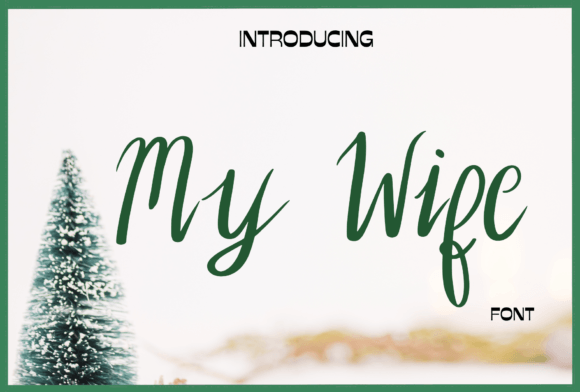
At first glance, My Wife is a cute and fun handwritten font. But look closer, and you’ll see the personality woven into every curve and connection. It’s whimsical and a bit quirky, with the kind of irregularities that give it authenticity. The letterforms flow with a gentle, organic rhythm, avoiding the rigid perfection of many script fonts. This isn’t a font that tries to mimic perfect calligraphy; it captures the charming imperfection of real handwriting. The slight variations in baseline and stroke weight create a sense of movement and life, making it feel as though the text is being written right before your eyes. This inherent character is what allows it to brighten up each of your designs, injecting them with a dose of approachable creativity that more formal typefaces often lack.
More Than Just a Pretty Face: Practical Applications
So, where does a font with this much personality shine? Its versatility might surprise you. Think beyond the obvious greeting card. For branding, it’s a secret weapon for businesses that want to project friendliness and authenticity. A local bakery, a boutique consultancy, a handmade jewelry line, or a yoga studio can use My Wife in their logo and brand identity to instantly communicate warmth and approachability. It tells customers, “We’re real people here.”
For packaging design, it’s a game-changer. Imagine it on a artisanal coffee bag, a bottle of homemade hot sauce, or a box of organic teas. It elevates the product from a mere item to a story, suggesting care, craft, and a personal touch. On social media graphics, it cuts through the digital noise. Use it for quote graphics, Instagram story headers, or promotional announcements to create visuals that feel engaging and shareable, rather than corporate and distant.
Its application extends beautifully to digital products and editorial layouts. Use it for chapter headings in an e-book, section titles in a digital magazine, or as a highlight font in a blog post to draw the reader’s eye to key ideas. For print materials like wedding invitations, event posters, or thank-you cards, it sets a joyful, celebratory tone. Even in web design, it can be used sparingly but effectively for headlines or pull quotes on a homepage to add a splash of personality against a clean, readable body font.
Building a Cohesive Visual Language
One of the biggest challenges in design is maintaining visual consistency across all touchpoints. A font like My Wife, when used strategically, becomes a cornerstone of that consistency. By applying it consistently to specific elements—like all your subheadings, your logo lockup, or your call-to-action buttons—you create a recognizable pattern. This strengthens brand recognition. Your audience will start to associate that friendly, handwritten style with your brand’s voice and values, even before they read the words.
However, its power lies in thoughtful application, not overuse. Pairing is critical. For body text or anywhere readability is paramount over long passages, you’ll want a reliable companion. A clean, simple sans-serif like Lato or Open Sans makes an excellent partner, providing a neutral, highly legible canvas that allows My Wife’s headlines to pop without causing visual fatigue. This thoughtful combination ensures your design maintains a professional presentation while still radiating personality.
A Few Practical Considerations
Before you dive in, take a moment to explore the font’s full character set. Check for stylistic alternates or ligatures that might offer even more creative options. Always test your font pairings in context. Does the handwritten headline sit well with the body copy? Is there enough contrast in weight and style? Remember that handwritten fonts are best used for display purposes—headlines, logos, short phrases. For extended reading, prioritize legibility with your secondary typeface.
Also, consider the licensing. If you’re using My Wife for commercial projects—selling merchandise, creating client work, or using it in a product for sale—ensure you have the appropriate commercial license. This is a standard and important step for any premium font asset. It protects both you as the creator and the font designer, ensuring the asset can continue to be developed and supported.
Ultimately, a font is a tool for communication. My Wife communicates joy, creativity, and a human connection. It’s not for every project—a law firm’s annual report might need something more austere. But for countless projects where you want to inject life, warmth, and a touch of whimsy, it’s a remarkably effective and delightful choice. It’s a design asset that does more than just display letters; it conveys a feeling, and that’s the true magic of great typography.