Famous Grunge: A Typeface with a Story to Tell
There’s a certain honesty in things that show their age. A well-worn leather jacket, a faded concert poster, a book with creased pages—they all carry a narrative. In the world of design, where polished and pristine often dominate, a font that embraces a textured, authentic past can be a powerful tool. This is where a typeface like Famous Grunge enters the conversation. It’s not just a collection of letters; it’s a vibe, a nod to an era of alternative music, DIY zines, and unapologetic self-expression.
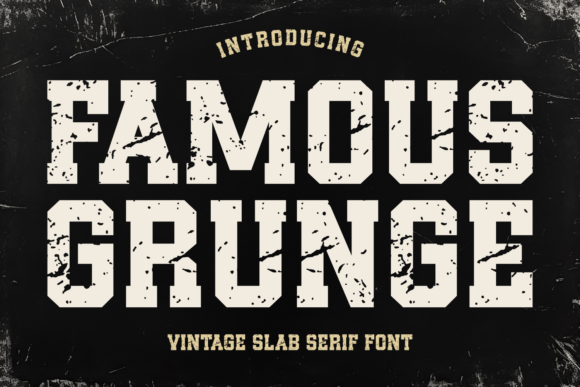
For designers and creators, finding a font that bridges the gap between nostalgia and modern application is like striking gold. Famous Grunge is a versatile Slab Serif that does exactly that. It captures the gritty, tactile feel of 70s, 80s, and 90s aesthetics without sacrificing the clarity needed for today’s projects. Think of it as the typographic equivalent of a vintage amplifier—it has history and character, but it still delivers a powerful, clear sound. Its thick, substantial letterforms provide a solid foundation, making it remarkably readable at larger sizes, whether on a screen or in print.
More Than Just a Logo Font
When you first encounter a font with this much personality, it’s easy to slot it into a single category—like “just for logos.” But the real value of a typeface like Famous Grunge is its surprising range. Its old-worldly charm and bold presence make it a standout choice for projects that need to make an immediate, lasting impression.
Consider your brand identity. A coffee roaster looking to evoke artisanal craft, a brewery with a story about its heritage, or an independent bookstore wanting to feel established and literary—these are perfect scenarios. The font’s inherent texture adds a layer of authenticity that clean, modern typefaces sometimes lack. It tells customers there’s substance and history behind the name.
Beyond branding, this creative font excels in editorial design. Imagine a magazine layout for a music publication or a feature on vintage fashion. Using Famous Grunge for headlines creates an instant thematic connection, drawing the reader in with its visual tone. For packaging design, it can transform a simple box or label into something that feels collectible and special, especially for products like vinyl records, artisanal goods, or specialty teas.
Practical Applications for the Modern Creator
Let’s get specific. How can you integrate a font with this much character into your workflow without overwhelming a design? The key is intentional pairing and strategic use.
For digital projects, think about social media graphics and websites. A bold, grunge-inspired header for a blog post about retro gaming or underground music instantly sets the mood. Paired with a clean, simple sans serif font for body text, you get the best of both worlds: eye-catching personality and easy readability. This font pairing strategy is crucial. Let Famous Grunge be the lead vocalist, and let a neutral typeface be the steady rhythm section.
In print, its applications are even broader. It’s a natural for poster design, event flyers, and album art. For merchandise like t-shirts and tote bags, its bold letters ensure the design stands out. It’s also an excellent choice for invitations to themed events, milestone birthdays, or even wedding celebrations with a non-traditional, rock-and-roll spirit. The multilingual support for Eastern European languages also makes it a practical choice for projects with a wider audience.
Making It Work: Tips for Effective Use
Using a display font with strong stylistic flair requires a thoughtful approach. Here’s some practical advice to ensure it enhances rather than hinders your project.
- Context is King. Always match the font’s personality to your project’s goal. Is the brand voice rebellious, nostalgic, or artisanal? If the project is for a corporate law firm or a pediatric clinic, Famous Grunge might send the wrong message. For a vintage record shop, it’s perfect.
- Test Your Pairings Relentlessly. Before finalizing, create mockups. See how Famous Grunge interacts with your chosen body copy font. Check the contrast and hierarchy. Does the headline grab attention without fighting the subtext? A good pairing feels balanced.
- Mind the Readability. While the thick letters are great for impact, use it primarily for headlines, titles, logos, and short bursts of text. Avoid setting long paragraphs in it, as the texture can reduce readability at smaller sizes. For body copy, stick to a simpler serif or sans serif font.
- Explore the Full Family. A premium font often comes with more than just the regular style. Check if Famous Grunge includes variations like bold, italic, or outline versions. These can give you more design flexibility within the same typographic system, helping maintain visual consistency across a brand’s materials.
- Understand the License. If you’re using this for a commercial project—a client’s logo, a product for sale, or marketing materials—ensure you have the correct commercial font license. This protects you legally and supports the font designers who created the asset.
A Tool for Telling Authentic Stories
Ultimately, typography is a silent ambassador for your brand or project. It communicates mood, value, and history before a single word is read. Famous Grunge offers a direct line to a design language that feels real, textured, and full of character. It’s a creative font that doesn’t just follow trends but taps into a timeless aesthetic that resonates with audiences seeking authenticity.
Whether you’re crafting a brand identity for a new startup, designing a captivating book cover, or creating social media content that needs to cut through the noise, this typeface provides a robust and evocative solution. It encourages you to think about the story your design is telling and gives you the visual tools to tell it with conviction. In a landscape crowded with sterile minimalism, sometimes the most professional and engaging choice is one that proudly shows its grit.