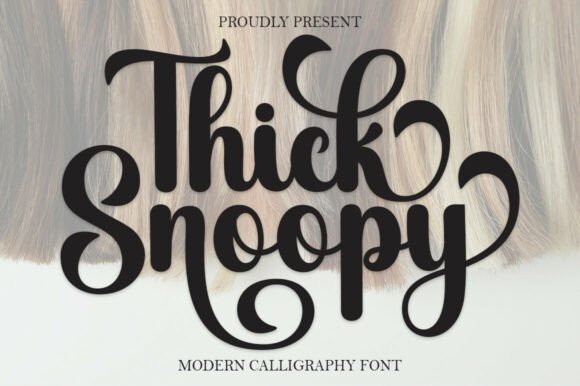
Thick Snoopy: A Script Font That Feels Like a Warm Handshake
There’s a particular feeling you get when you see typography that just works. It’s not just about reading the words; it’s about the personality they carry. Some fonts feel cold and corporate, while others feel like a friendly conversation. Thick Snoopy sits firmly in that second category, offering a blend of charm and elegance that’s surprisingly versatile. It’s a stylish homage to classic calligraphy, but with a modern, approachable weight that makes it feel both familiar and fresh. This isn’t a font that whispers; it speaks with confidence and warmth, making it a powerful tool for anyone looking to add a human touch to their visual communication.
More Than Just Pretty Letters: The Practical Appeal of a Sturdy Script
At its core, Thick Snoopy is a display script font. That means it’s designed to be used for headlines, logos, and other prominent text where personality is key. Its thick, flowing strokes give it a substantial presence on the page or screen, ensuring it won’t get lost in a busy layout. But what makes it truly practical is its balance. While it has the graceful, connected feel of handwritten calligraphy, its thickness ensures it remains legible even at smaller sizes or when printed on textured materials. This is a common hurdle with many script fonts, but Thick Snoopy manages to feel both decorative and functional.
Think about the last time you saw a wedding invitation, a boutique product label, or a bakery’s logo. There’s a good chance the typography used a script font to convey elegance, craftsmanship, or a personal touch. This is where fonts like this shine. They become a key part of the brand’s story. For a small business owner, choosing a typeface like this for their logo or packaging isn’t just an aesthetic decision; it’s a strategic one. It immediately signals a certain quality and care, helping to build recognition and connect with a target audience that values authenticity.
Where to Use This Charming Typeface for Maximum Impact
The applications for a font with this kind of personality are wide-ranging. Its strength lies in projects where you want to evoke emotion, tradition, or a handcrafted feel.
- Brand Identity & Logo Design: This is a prime use case. A script font can become the cornerstone of a brand’s visual identity, especially for businesses in the wedding, beauty, artisan food, or boutique retail spaces. It helps create a logo that feels bespoke and memorable.
- Invitations & Stationery: From wedding suites to party invitations and thank you cards, the elegant flow of the font sets a celebratory and personal tone right from the start.
- Packaging & Labels: For products like cosmetics, gourmet foods, candles, or handmade goods, the right typography on the label can communicate the product’s story and quality before it’s even opened.
- Editorial & Blog Design: Used sparingly for pull quotes, article titles, or section headers in a magazine layout or on a blog, it can break up monotony and draw the reader’s eye to key moments.
- Social Media & Digital Marketing: A standout script font can make Instagram graphics, Pinterest pins, or promotional banners feel more polished and cohesive, stopping the scroll with its visual appeal.
It’s also worth noting that a premium font often comes with a commercial license, which is essential for anyone using it in client work or on products for sale. Always review the licensing terms to ensure your use is covered, whether it’s for a digital download, a printed poster, or merchandise like t-shirts and mugs.
Making It Work: Practical Tips for Pairing and Readability
Using a strong display font like this effectively requires a bit of strategy. The goal is to let it shine without overwhelming your design or sacrificing clarity.
Pairing is Everything: A script font rarely works well on its own for body text. The key is to pair it with a simpler, more neutral typeface. A clean sans-serif font (like Helvetica, Open Sans, or Proxima Nova) or a classic serif font (like Garamond or Georgia) can provide a perfect counterbalance. Use the script for headlines and the simpler font for paragraphs and smaller text. This creates a visual hierarchy that guides the reader’s eye and maintains readability.
Consider the Context: Think about where the text will be viewed. A thick script might look stunning on a large poster but could become a blob of ink on a low-resolution mobile screen. Always test your designs at the actual size they’ll be used. For web design, ensure the font renders clearly across different browsers and devices.
Spacing and Color: Give the letters room to breathe. Adequate line spacing (leading) and letter spacing (tracking) can dramatically improve the legibility of any script font. Also, consider color contrast carefully—light gray script on a white background is a recipe for frustration. High contrast ensures your elegant message is actually read.
Explore the Full Family: Many premium font families include multiple styles. Check if the typeface you’re considering has alternates, ligatures, or swashes. These are alternate character designs that can add even more flair and customization to your work, allowing you to avoid repetitive letter shapes and create a truly unique look.
Choosing a Font That Tells Your Story
Ultimately, selecting a typeface is about finding a voice for your project. Thick Snoopy offers a voice that is confident, approachable, and timeless. It’s a creative font that can help a brand feel more established, a wedding invitation feel more romantic, and a social media graphic feel more intentional. It’s not about following a trend; it’s about choosing a design asset that communicates the right values and emotions to your audience.
When you invest time in selecting the right typography, you’re investing in clarity and connection. You’re building a visual language that people will come to recognize and trust. Whether you’re a designer crafting a full brand identity, an entrepreneur launching a new product, or a hobbyist creating something special for a loved one, the fonts you choose are fundamental building blocks. A typeface with character, like this one, provides a solid and stylish foundation to build upon, helping your work stand out with a touch of handcrafted elegance.