Father Farmhouse: A Font Pairing That Balances Whimsy and Clarity
Imagine you are sketching out the visual identity for a new coffee shop, a boutique bakery, or perhaps a cozy lifestyle blog. You need a typeface that feels inviting and warm, something that mimics the personal touch of a handwritten note, but you also need to ensure that your menu items, pricing, and descriptions are legible at a glance. This is a common dilemma in design: how to combine the emotional appeal of a script font with the structural necessity of a sans serif. Enter Father Farmhouse, a duo font that solves this problem by packaging a charming script with a clean sans serif companion. It is designed specifically for creators who want to inject personality into their work without sacrificing professionalism.
A Visual Balance: Script and Sans Serif Combined
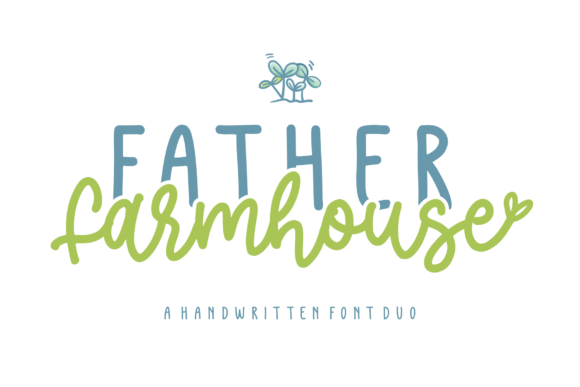
The core appeal of this typeface lies in its duality. On one hand, you have the script component, which is undeniably "cute." It features rounded edges, a bouncy baseline, and fluid connections that mimic natural handwriting. This style is excellent for capturing attention and setting a specific mood—usually one that is friendly, artisanal, or boutique. However, using a script font for an entire design can quickly become exhausting for the reader. That is where the sans serif companion comes in. It offers a modern, geometric structure that grounds the whimsy of the script. When used together, they create a visual hierarchy that guides the eye naturally from the headline to the body text.
The versatility of Father Farmhouse extends to its decorative elements. The script includes cute swashes—those decorative flourishes that extend from the letters—which can be used to frame titles or add emphasis to specific words. These swashes are particularly useful for logo design and hero images on websites, where you want to make a strong first impression. Meanwhile, the sans serif remains straightforward, ensuring that the message is never lost in the decoration. This balance makes it a practical choice for commercial font needs where clarity is just as important as style.
Practical Applications for Branding and Marketing
For small business owners and entrepreneurs, choosing a font is often about more than just aesthetics; it is about finding a tool that works across multiple platforms. A strong brand identity requires consistency, and using a duo font like this simplifies that process. You do not need to hunt for a separate display font and text font because they have been curated to work together out of the box.
Consider the world of packaging design. If you are selling artisanal soaps, handmade candles, or gourmet snacks, the "Father Farmhouse" script can be used on the front of the box to convey the handmade quality of the product. The sans serif can then be used on the back for ingredients and instructions, ensuring compliance with readability standards while maintaining the brand's aesthetic. This seamless transition between styles helps build brand recognition. Customers begin to associate that specific visual rhythm with your product.
In the realm of digital marketing, this font pairing shines on social media graphics. Instagram stories, Pinterest pins, and Facebook ads often require text to be overlaid on busy images. The bold, clean nature of the sans serif ensures the text remains readable, while the script can be used for call-to-action phrases like "Shop Now" or "Learn More" to draw the eye. Because the font is designed to be a premium font asset, it renders well at various sizes, which is crucial for responsive web design where text needs to look good on both a 27-inch monitor and a 5-inch smartphone screen.
Matching Typography to Project Goals
One of the most common mistakes in graphic design is choosing a typeface based solely on personal preference rather than project requirements. The "cute" aesthetic of Father Farmhouse is not appropriate for every industry—for example, a corporate law firm or a heavy industrial manufacturer might find it too informal. However, for specific niches, it is incredibly effective.
Think about editorial design for a cooking magazine or a DIY craft blog. The script font can be used for pull quotes and section headers to break up long blocks of text, adding a visual pause that keeps the reader engaged. The sans serif works perfectly for the main body copy, allowing for extended reading without eye strain. Similarly, for invitations—whether for weddings, baby showers, or birthday parties—the font captures the celebratory spirit immediately. It provides that bespoke, hand-crafted look that many people desire for stationery, but with the precision of digital typesetting.
When working with merchandise, such as t-shirts, tote bags, or mugs, the swashes mentioned earlier become a significant design feature. They allow you to create shapes and layouts that feel organic and unique to the item. For instance, the script can curve around a circular badge design, a technique often used in vintage-inspired branding. This flexibility allows designers to create complex compositions without needing advanced vector illustration skills, making it a valuable asset in a creative toolkit.
Design Tips for Using a Duo Font
To get the most out of a typeface like Father Farmhouse, it helps to follow a few best practices regarding font pairing and layout. First, resist the urge to use the script font for everything. While it is the star of the show, it loses its impact if overused. Save it for headlines, logos, or short phrases where its personality can shine. Use the sans serif for all longer text blocks, such as descriptions, bios, or terms and conditions.
Second, pay attention to sizing. Script fonts often need to be set at a slightly larger size than sans serifs to maintain readability because of their thinner connecting strokes. When designing a web design layout, test the font pairing at different breakpoints. What looks elegant on a desktop header might become illegible on a mobile screen if the font size scales down too much.
Third, consider the color palette. A whimsical font like this pairs well with soft, pastel color schemes for a feminine or youthful vibe. Alternatively, it can be used with high-contrast colors—like black and white or navy and gold—to create a more sophisticated, modern typography look. The "cute" nature of the font is malleable depending on the context and colors you place it in.
Licensing and File Formats
Before finalizing your design, always review the licensing terms of your design assets. If you are using Father Farmhouse for a client project or for items you intend to sell (like the merchandise or digital products mentioned earlier), you need to ensure you have the correct commercial license. Most premium fonts come with a license that covers a specific number of users or projects. Understanding these terms protects you legally and ensures that you are respecting the work of the type designer.
Additionally, check the file formats included. A high-quality font package usually includes OpenType (OTF) or TrueType (TTF) files. Some may also include web font formats like WOFF or WOFF2 for easier implementation on websites. Having access to these files ensures that your visual communication remains consistent across print and digital mediums.
Ultimately, Father Farmhouse offers a practical solution for a wide variety of creative challenges. It bridges the gap between the need for personality and the requirement for structure. Whether you are a content creator looking to spice up your YouTube thumbnails, a marketing professional designing a flyer, or a hobbyist working on a scrapbook, this typeface provides the tools to create polished, engaging designs that resonate with your audience.