Olde Victorian: Bringing Timeless Elegance to Modern Design
There is a certain weight to history that is hard to replicate in the digital age. We often scroll through endless streams of minimalist sans-serifs and geometric logos, searching for something that feels a bit more substantial. If you are working on a project that requires a voice of authority, heritage, or artisanal luxury, standard modern typography often falls flat. This is where the specific mood of the 19th century—think gas lamps, intricate ironwork, and hand-crafted signage—becomes an invaluable design asset. It isn't just about being old-fashioned; it is about capturing a sense of established prestige and visual storytelling that few other styles can achieve.
Capturing the Spirit of the Victorian Era
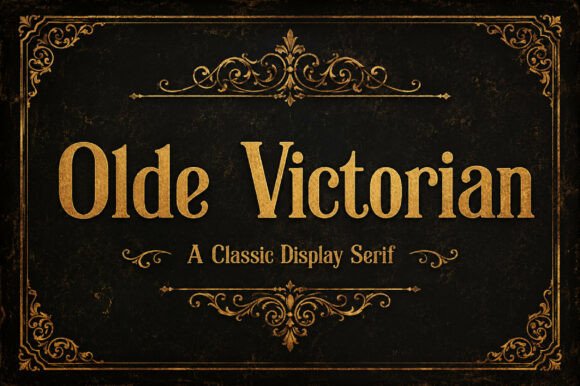
When we talk about Olde Victorian, we are discussing a specific type of display serif that draws heavily from the typographic trends of the mid-to-late 1800s. This era was defined by ornamentation and boldness. Unlike the quiet, understated fonts often used for body text today, a display typeface like this is meant to be seen. It commands attention through high-contrast strokes and rhythmic, rounded terminals. The visual weight is polished and deliberate, creating an immediate association with craftsmanship and high quality.
For a graphic designer or creative entrepreneur, understanding the "personality" of a font is half the battle. This typeface radiates a soulful vintage grace. The serifs are pronounced, and the letterforms often possess a decorative posture that feels hand-drawn yet highly structured. It is the typographic equivalent of a velvet smoking jacket or a brass pocket watch—it suggests that whatever it is labeling has been made with care and attention to detail. If your brand identity relies on storytelling, this font provides the perfect prologue.
Strategic Applications for Branding and Packaging
The practical value of a premium font lies in its versatility across different media. While Olde Victorian is undeniably a display font—meaning it shines brightest in headlines and logos rather than long paragraphs—its applications are vast. In the world of packaging design, particularly for the high-end market, typography is the silent salesperson. Imagine a craft whiskey label or a boutique chocolate box. A clean, modern sans-serif might look sleek, but it can also feel cold or mass-produced. Conversely, using a classic serif with high-contrast strokes immediately signals that the product inside is bespoke and artisanal.
This font is an extraordinary choice for:
- Luxury Boutique Branding: Establishing a high-end identity for fashion, jewelry, or home goods.
- High-End Spirits Labels: Conveying the aging process and heritage of the distillery.
- Bespoke Event Invitations: Setting a formal, elegant tone for weddings or galas.
- Antique-Inspired Editorial Headers: Giving magazines or book covers a classic, authoritative feel.
For small business owners, the choice of typography is often the bridge between a hobby and a professional brand. Using a typeface that looks "expensive" or "established" can psychologically influence how customers perceive your price point and quality. It helps improve brand recognition because it is distinctive; it doesn't look like the free fonts everyone else is using.
Improving Visual Consistency and Audience Engagement
One of the biggest challenges in design is maintaining visual consistency across various platforms. You need a font that looks as good on a website header as it does on a physical business card. Because Olde Victorian carries such a strong visual weight, it anchors a design layout. It provides a focal point that draws the eye, which is crucial for audience engagement.
In web design, for example, you might use this typeface for the hero section or major headings. The intricate details of the serifs and the rhythmic curves make the text almost illustrative. However, this brings us to a vital point regarding readability. Display fonts are designed for impact, not for extended reading. You would not want to write your blog post body copy or your product descriptions in Olde Victorian because the ornamentation that makes it beautiful at 60px makes it difficult to read at 16px.
Therefore, the success of using this font relies heavily on font pairing. To maintain a professional presentation, you need to balance the ornate nature of the display serif with something cleaner for the body text. A neutral sans-serif or a simple, humanist serif usually works best. This contrast allows the headers to shine without overwhelming the reader, ensuring your message is delivered with clarity and style.
Practical Advice for Implementation
If you are considering integrating this style into your workflow, there are a few practical steps to ensure it enhances rather than hinders your project. First, always test your font pairings before committing. Try pairing the Victorian style with a sans-serif font like Helvetica or a clean serif like Garamond. You want the body text to recede slightly, allowing the headline to pop.
Second, consider the licensing. If you are working on a commercial project—whether it is a logo design for a client, social media graphics for a brand, or digital products for sale—you must ensure you have the appropriate commercial license. Most premium font providers offer different tiers, such as desktop licenses for print and webfont licenses for online use. Respecting these boundaries is part of being a professional designer.
Finally, pay attention to spacing. Fonts with high-contrast strokes and decorative elements often need a bit more breathing room (tracking) than standard text fonts. Increasing the letter spacing slightly in your headers can make the text feel even more luxurious and easier to digest, preventing the letters from clashing visually.
Ultimately, choosing a typeface like Olde Victorian is about making a statement. It is about refusing to blend in with the sea of generic design assets and instead offering your audience a visual experience that feels rich, historic, and intentional. Whether you are designing a poster, curating a blog layout, or building a brand identity from the ground up, this classic display serif offers a bridge to a time when typography was as much about art as it was about communication.